

OPINION:
Managing the relationship with China will continue to be an onerous task for every American administration. In recent months, U.S. firms operating in China have been harassed by officials. Of equal concern is a new counterespionage law that encourages Chinese citizens to report perceived suspicious activity. The new regulation also reinforces the government’s ability to take control of American assets and intellectual property.
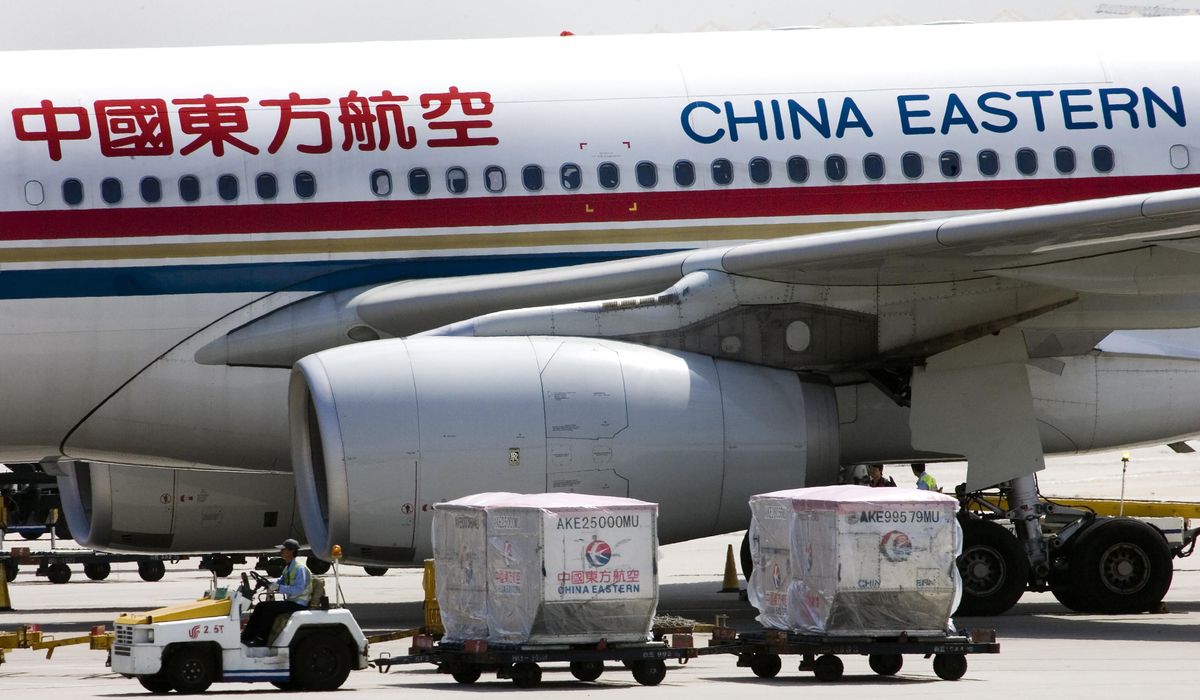
U.S. airlines could well be the next commercial casualty of China’s quest for global supremacy, with American demise as its central premise. Chinese carriers have a track record of dumping capacity, which drives ticket prices below the cost of flying to the point that U.S. airlines are unable to compete. If Chinese airlines can ignore all revenue concerns, the inevitable outcome is Chinese domination of air routes. It is anything but a level playing field.
Although global travel, including between the United States and China, has resumed, heavy U.S. government unease exists about traveling to China. The State Department lists concerns in its travel advisory to American citizens, rating China at level 3: Reconsider travel.
Yet a few months ago, the Department of Transportation implemented a policy of increasing scheduled flights to China. It remains to be seen how these competing policies will intersect.
As in most other industries, U.S. air carriers are disadvantaged when attempting to compete in the Chinese market. Unlike many other major aviation partner nations, the U.S. and China have no Open Skies Agreement in place reflecting modern rules. The tweaks to the dated bilateral 1980 Civil Air Transport Agreement have not resulted in reciprocity for U.S. carriers.
Like other Chinese entities, its airlines face few barriers when entering the liberal American market. In contrast, the obstacles in the Chinese market for U.S. carriers continue to grow.
In addition, since Russia invaded Ukraine in February 2022, Western airlines are no longer permitted to fly over Russian airspace. The alternate routes result in longer flights, increased fuel use and higher operating costs. Chinese carriers still have the benefit of direct routes over Russia. It is becoming impossible for U.S. carriers to compete effectively.
The federal government’s index of dumping and other anti-competitive behavior illustrates that Chinese-led companies regularly skirt trade rules at the expense of the American economy. The aviation market cannot snap back to its pre-pandemic conditions that disadvantage U.S. airlines, a major driver of the nation’s economy.
Secretary of State Antony Blinken and Secretary of Transportation Pete Buttigieg should use the regulatory mechanisms at their disposal to ensure a level playing field for U.S. airlines in the interest of our economic security.
During the global shutdown, travel and business largely stood still. Upon resumption, rather than revert to an inequitable model that, at best, hampers and, at worst, penalizes domestic airlines, there is an opportunity to restore a system of parity ensuring that U.S. carriers do indeed have open skies ahead. America should take it.
• Manisha Singh is former assistant secretary of state for economic and business affairs and principal at Sunstone Strategy Group.

