

THE GOOD VIRUS: The Amazing Story and Forgotten Promise of the Phage, by Tom Ireland
THE MASTER BUILDER: How the New Science of the Cell Is Rewriting the Story of Life, by Alfonso Martinez Arias
In the 1910s, more than a decade before the discovery of penicillin, the self-fashioned microbiologist Felix d’Herelle was growing diarrhea-inducing bacteria in his lab. A scientist of few credentials and uncertain birth — no one knows if he was French, Belgian or Canadian — d’Herelle hoped to start an epidemic of the runs among a plague of locusts in Mexico and thus kill them off.
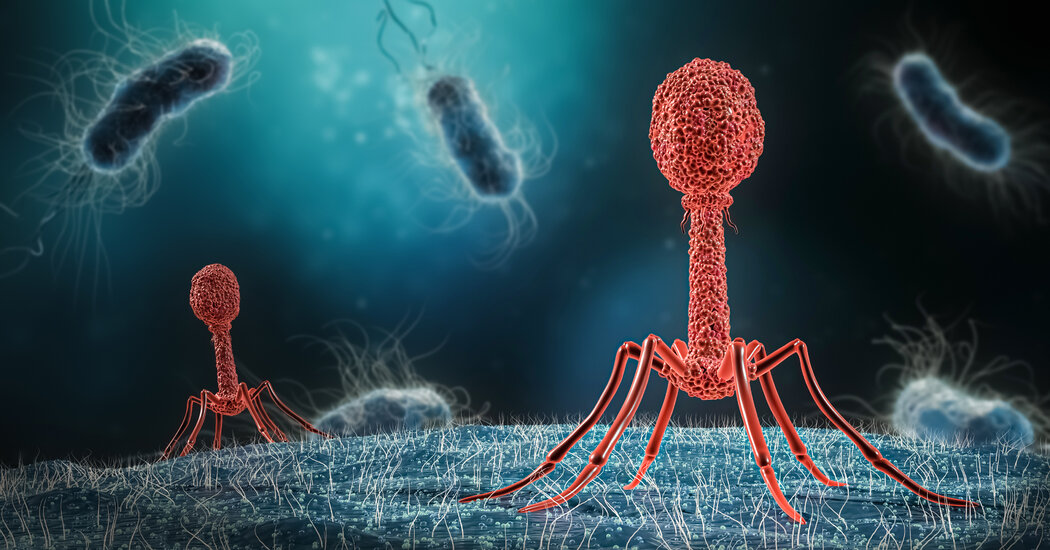
While cultivating his deadly microbial soup, he noticed something strange. A mysterious entity had left holes in one of his thin films of bacteria. He took samples from within the holes, spread them on other plates of bacteria and got the same effect. More holes! He knew he had something, but what was it? The culprit, it would later turn out, was a phage, a kind of virus that “eats” bacteria.
While recent events have provided a painful reminder of the very bad viruses that prey on us, Tom Ireland’s “The Good Virus” is a colorful redemption story for the oft-neglected yet incredibly abundant phage, and its potential for quelling the existential threat of antibiotic resistance, which scientists estimate might cause up to 10 million deaths per year by 2050. Ireland, an award-winning science journalist, approaches the subject of his first book with curiosity and passion, delivering a deft narrative that is rich and approachable.
In the hands of d’Herelle and others, the phage became a potent tool in the fight against cholera. But, in the 1940s, when the discovery of the methods to produce penicillin at an industrial scale led to the “antibiotic era,” phage therapy came to be seen as quackery in Europe and America, in part, Ireland suggests, because antibiotics, unlike phages, fit the mold of capitalist society.

