

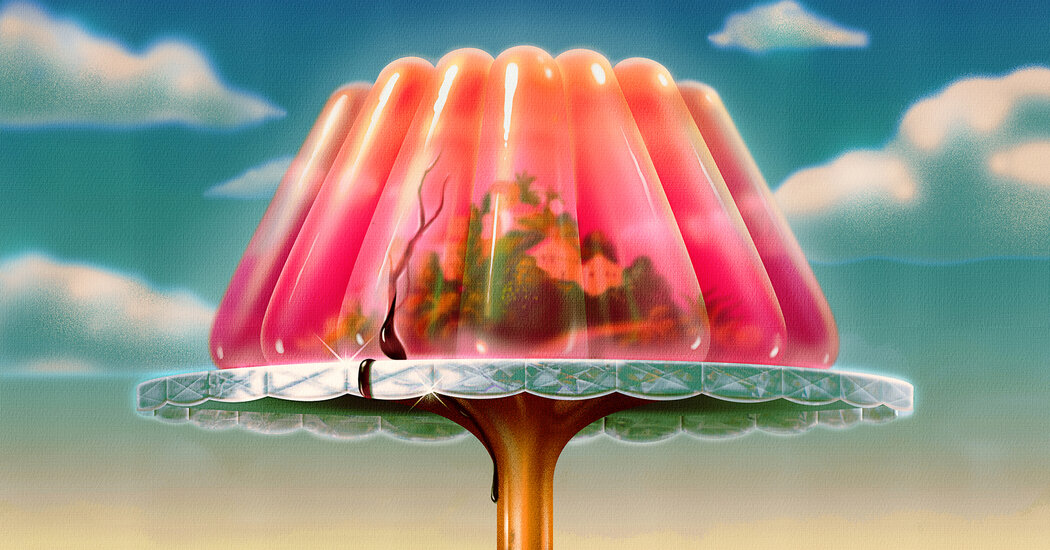
LAND OF MILK AND HONEY, by C Pam Zhang
A couple of summers ago, as I drove through Oregon amid a record heat wave across the Pacific Northwest, I pulled over at a trailhead to eat a plum. Wildfires were burning, temperatures hovered around 100 degrees and the pine forest in front of me had been rendered ghostly, the edges of everything lost and faintly browned by smoke. It was a shock, then, to bite into the fruit and taste its disruptive sweetness, how fresh and pure it was in spite of the surroundings. It was the sort of thing that tears the mind and body in opposite directions — and as we face down a moment increasingly dominated by environmental crisis, this may be the ambivalent flavor of our future: sweet and bitter and full of contradiction.
C Pam Zhang’s second novel, the follow-up to her Booker-longlisted western “How Much of These Hills Is Gold,” dwells with keen intelligence and rich insight at this nexus of food, pleasure, privilege and catastrophe, offering a mouthful of nectar that tastes faintly of blood. Set in a not-so-distant future where industrial-agricultural experiments carried out in America’s heartland have blanketed the globe in an intractable, crop-smothering smog, the novel is narrated by a talented unnamed chef whose calling feels obsolete in a world where the livestock have been slaughtered, vegetation has withered away and civilization’s survival rests on the bland, grayish back of a specially engineered mung bean flour milled from plants that can be grown under low light conditions.
When her application for the chef position at a remote, privately owned “elite research community” is accepted, she travels to its secret location in the Italian Alps that is mysteriously untouched by the blight, leaving behind a certain youthful idealism to pursue a destiny in excess of bare survival. Channeling something of the fatalistic nostalgia of Marguerite Duras’s “The Lover,” she narrates: “If I hesitated at my younger self’s declaration that everyone would taste my food, that cooking was an art neither frivolous nor selfish — well. I was no longer she who’d left California with scruples and ambition; as I did not know who I was, exactly, I molded myself to the application’s shape.”
La terra di latte e miele, as the area is called by the embittered Italian population that surrounds it, is an uneasy utopia where wealthy residents and resentful scientists jockey for the favor of their benefactors, a reclusive capitalist and his sharp-tongued daughter, Aida, a geneticist who masterminded much of the mountain’s research program breeding rare and even extinct varieties of plants and animals.

