

OPINION:
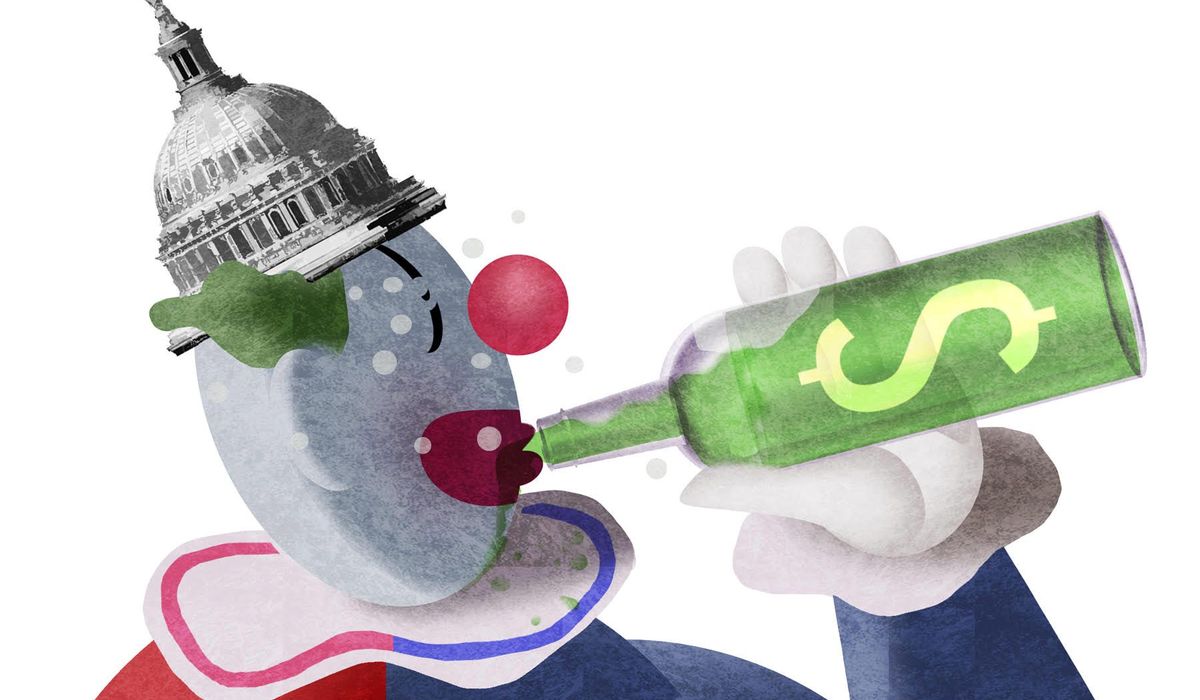
Congress has a problem. Its decades-long addiction to spending has spiraled out of control.
“Regular order” budgetary rules that were supposed to keep lawmakers’ profligate instincts in check are ignored, leaving us with a process designed to ensure perpetually elevated government funding levels.
There has to be a better way.
Once upon a time, the threat of a government shutdown was sufficient to bring negotiators to the table to hammer out a compromise. No more.
The divisions in Congress are legion and not always easily defined. Each of the 12 regular appropriations bills the House and Senate create pots of money, with members seeking a share of each to address particular concerns in their own district.
Unable to agree on how to divide the public treasure, a group decision is made to just enlarge all of the pots. Everyone’s happy — except the taxpayers ultimately stuck with the bill.
In a strong and growing economy, that’s a tolerable outcome. In a weak economy, or during a recession, the scheme triggers further borrowing and tax increases. Left unchecked, as it has been for most of the last two administrations, it leads to fiscal disaster.
In 2019, Congress spent $4.4 trillion, which was 21% of the country’s gross domestic product. Now, not five years later, the White House wants to boost that lofty sum by $2.5 trillion — a 56% increase.
Rather than attempt wholesale reform of this broken process, Congress ought to consider patching it with the reasonable fix suggested by Sens. James Lankford, Oklahoma Republican, and Maggie Hassan, New Hampshire Democrat. Their bill would place the budget on temporary autopilot in the event spending plans aren’t passed and signed into law before the end of the fiscal year. It would then cancel congressional travel and force members to stay in town to work on the appropriations bills until the job is done.
That would prevent future shutdowns and eliminate the artificial drama that surrounds them. It would also go a long way toward equalizing the power of those who don’t want to spend more and those who do.
As things are, legislators committed to spending restraint who fight and win important budgetary battles can see those victories erased in a single late September or early October omnibus spending package adopted in the dark of night before anyone knows what’s in it. This legislative alternative would remove the “we have to keep the government open” arrow from the spenders’ quiver.
Past unbalanced budgets were irresponsible, but at least they proved manageable in the long term while interest rates were stable, and the debt as a percentage of GDP remained largely unchanged.
Those days are gone, and, unless something is done, will never come back. Inflation, rapidly accumulating debt, the growth in entitlement programs and interest payments as a portion of total spending is bringing the nation closer than ever to the financial tipping point.
America doesn’t need another smoke-and-mirrors deal that claims to “cut” the budget while, in reality, locking in outrageous COVID-era spending levels. Eliminating the leverage that future government shutdowns give to the big spenders could be a useful first step toward restoring sanity to a system that has been broken for far too long.

