

OPINION:
The space race is heating up again, and the prime contestants are already jostling for advantage. Russia and China are poised to transport their aggressive behavior to the moon as neither nation with extraterrestrial aspirations has deigned to sign a global accord guiding their relations out there. Lunar explorers could be in for a world of trouble.
Emergent collaboration between the two continental heavyweights has featured tacit approval of each other’s military adventurism. This is currently manifested in Russia’s attempt to devour Ukraine and China’s ongoing preparations for ingesting Taiwan. It should be unsurprising, then, that the neighboring duo agreed in 2021 to construct a joint lunar base, dubbed the International Lunar Research Station. Several other spacefaring wannabes have accepted an invitation to join their project, including Venezuela, the United Arab Emirates and Pakistan.
It is noteworthy that members of the incipient Russia–China pact chose not to sign on to the Artemis Accords, a 28-nation international space agreement spearheaded by the United States in 2020. The stated purpose of the accords is to establish “principles for cooperation in the civil exploration and use of the moon, Mars, comets and asteroids for peaceful purposes.”
Given the aggressive earthly behavior of the two Eurasian powers, there is reason to suspect that “peaceful purposes” are not necessarily a priority for their future lunar operations. How do you say “nice guys finish last” in Russian and Chinese?
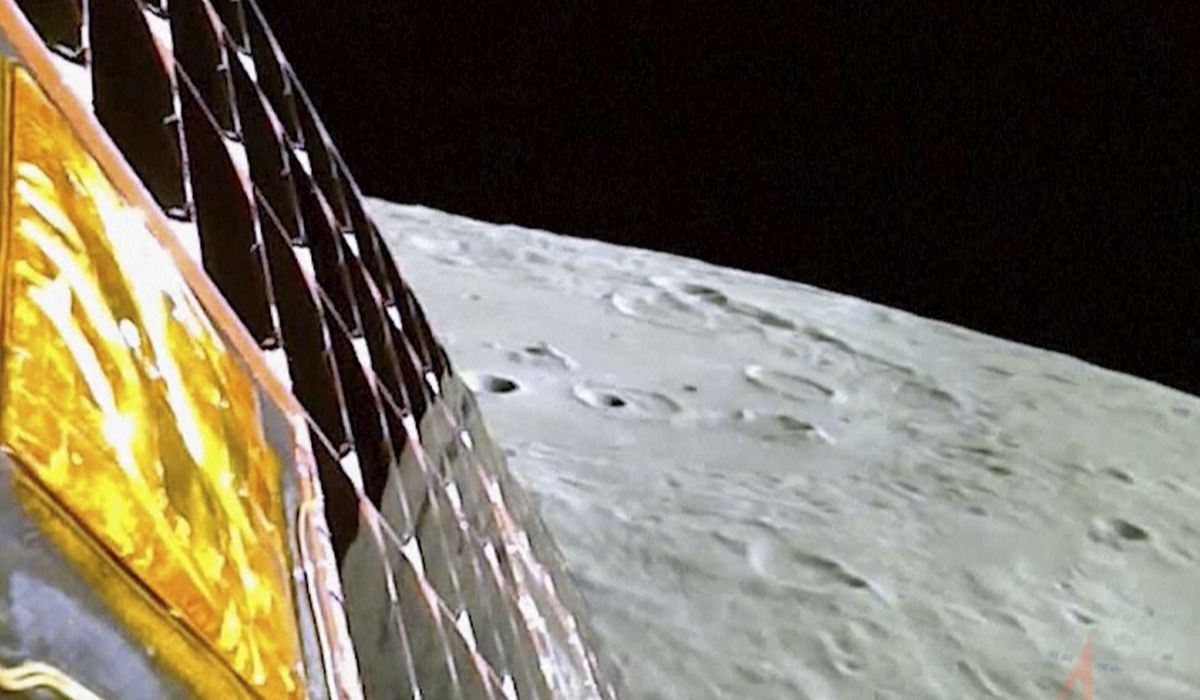
With an underwhelming recent record in space, Russia in particular, lags behind the frontrunners in the sprint to the moon. In a module-to-module race to accomplish a soft landing on the lunar surface, Russia’s unmanned Luna-25 spacecraft crashed while India’s Chandrayaan-3 set down safely on Wednesday.
China has had even better fortune, landing a spacecraft on the dark side of the moon in 2019 and retrieving lunar material during a round-trip mission the following year. These successes lend credibility that more than atones for Russia’s lackluster performance. They also suggest there is little reason to bet against the project’s timetable of constructing a habitable facility near the moon’s south pole by 2035.
For their part, Americans and fellow Artemis Accords signatories intend to set up shop in the same southern lunar region starting in 2031. Researchers have discovered that the area contains a wealth of ice, which can furnish explorers with potable water. The ice also can be broken down into hydrogen and oxygen for use in making rocket fuel to power future expeditions to Mars and beyond.
With a diameter only a quarter of Earth’s, the moon is still large enough that lunar explorers need not be short of elbow room. But we’ve seen a lack of interest in sharing here on earth. Habits of absorbing coveted lands, as China has done in Tibet, or coveted waters as in China’s vast and imaginative claims over the South China Sea, have no place in space. Much less would Russia’s military adventurism be welcome.
Rather than carry any historical taste for territorial conquest skyward, spacefaring nations one and all should mind their manners on the moon, prioritize humanity over nationality and ensure that the space race ends in an unparalleled advancement for the entire human race.

