

I’m tempted to lump my love of the Avengers in with the same affection for powerful weirdos that drew me to the X-Men, Guardians of the Galaxy and even the A-Team. But their group dynamic doesn’t quite match up with the tropes of exceptional outsiders and found families — at least in the comics. The Avengers roster has grown so vast and varied that, of course, some of its characters fall into the category of deadly and persecuted oddball. But their group dynamic is not defined by persecution or otherdom. Instead, they’re the best of the best, anchored by a god, a one-percenter and a resurrected icon. They are Earth’s mightiest heroes, brought together not by desperation, but by the fact that someone has to get the job done.
I didn’t remember the actual story of that first comic that lured me into the Avengers’ world, so I looked it up. In Issue No. 236, Spider-Man does indeed try to join the Avengers — and he does it because he finds out the Avengers make $1,000 per week. If the Fantastic Four represent a fantasy of an actual family, and the X-Men represent a fantasy of found family, maybe the Avengers represent a fantasy of adult life and, well, work. The story lines they follow offer comics fans another kind of twist and a different kind of team. After their early adversary Space Phantom is exiled to limbo, the expectation is that, having successfully bested this villain, all of our heroes will shake hands, brush off the battle, and maybe go out for shawarma. Instead, just one issue after our Avengers assemble, the Hulk is done with this crew.
The Hulk knows he doesn’t fit into this particular corporate culture. His high-angst, heavy-damage ways are more suited to a solo artist — or to an outsider team with a gift for handling chaos. He’ll be back, of course, but Ant-Man (in his many different incarnations) and the Wasp don’t last much longer. This establishes a pattern we’ll see again and again with the Avengers of new hires that do and don’t work out.
Surprisingly, some of the Avengers with the most staying power are villains who often maintain a sense of ambivalence about the role they have to play in this particular organization. At any given time and in any given run, the Avengers are constantly recalibrating their moral compasses, each hero or villain or antihero’s continued participation in a mission dependent upon an individual sense of right and wrong. So while the sheer strength and conviction of Cap, Thor and Tony Stark create a kind of overpowered stability, it is repeatedly and thrillingly undermined by the people they invite onto the team. People date whom they shouldn’t. They team up, break up, join up with rivals, leave in an apocalyptic huff, return to the fold. The atmosphere among the Avengers is less league of heroes bound by honor than Earth’s most hostile work environment: a constantly shifting, conflict-generating story machine.
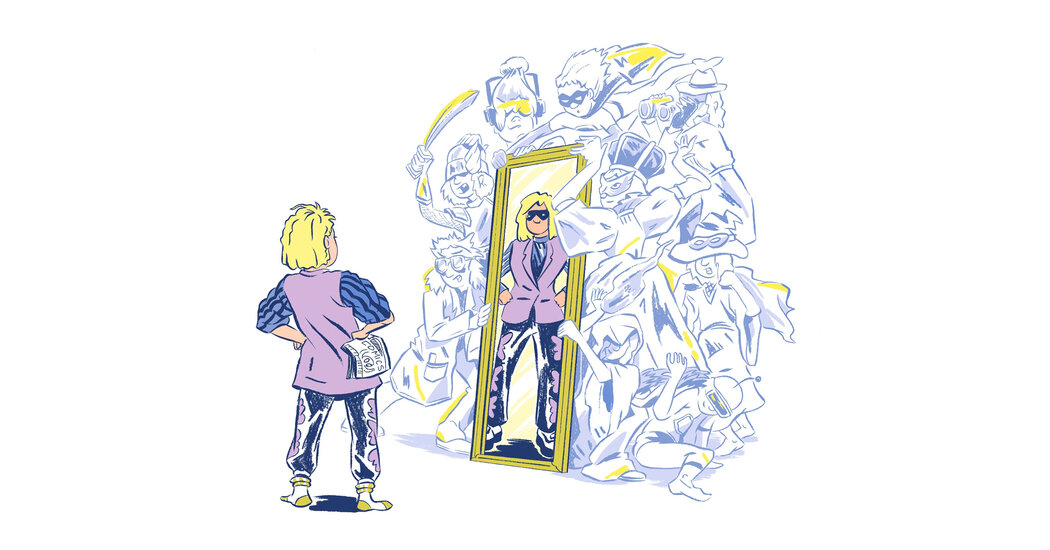
Spidey may have been the bait, but what kept me coming back to the Avengers was that spinning-top sense that everything could be upended through the force of a single personality and its influence on the group. Powers can be lost and regained. Universes can unravel. Like most kids, I dreamed of being exceptional and escaping the ordinary world. But who I wanted to be changed from moment to moment — sorceress, assassin, warrior, queen, hero, villain. Among the Avengers, there was always an opening, a chance to apply. They revealed a thousand doors to the Marvel Universe and gave me the giddy belief not only that anything could happen but that, for a short time, in whatever guise, I could be a part of it.

